
There are a lot of beautiful wedding venues in Calgary. Industrial spaces with exposed brick. Hotel ballrooms with sparkling chandeliers. Historic buildings, garden ceremonies, mountain views, and rooms that look like they were designed specifically for your Pinterest board.
And honestly, that’s a pretty good place to start.
But choosing a wedding venue based entirely on how it looks is a little like choosing a house based on the kitchen. Important? Absolutely. The whole picture? Not quite.
Because once the ceremony is over, the cocktails have been poured, and everyone has found their assigned seat, your venue has another job to do.
It needs to work.
Guests need to move comfortably through the space. Everyone should be able to hear the speeches. Dinner needs room to happen without turning into an obstacle course. And when the formalities are finished, the transition from a lovely dinner to a genuinely good party should feel natural.
When couples are searching for a Calgary wedding venue, the photographs, location, capacity, and price are obvious considerations. The less obvious questions are often the ones that make the biggest difference to the experience.

Here’s what I’d look at before signing a venue contract.
1. Don’t Just Look at the Room. Imagine the Entire Evening.
Most wedding venues are shown at their best. Tables are perfectly arranged, lighting is flattering, flowers are exactly where they should be, and not a single guest has left a jacket on the back of a chair.
It’s easy to fall in love with the photograph.
The trick is imagining what happens when the room is actually being used.
Where will guests gather during cocktail hour? Where will they sit for dinner? Can they see the head table during speeches? Where will the DJ or band set up? And what happens when the dance floor opens?
These aren’t separate events happening in separate photographs. They’re different stages of the same evening, often happening in the same room.
A venue that looks spacious when empty can feel surprisingly tight once you add dinner tables, a bar, a dance floor, a DJ setup, a photo booth, and a couple hundred people.
Before booking, ask to see a floor plan that reflects your approximate guest count and intended setup. If the venue has hosted weddings similar to yours, ask how those rooms were arranged.
You don’t need to have every detail figured out yet. You just want to know that the space can accommodate the experience you’re planning.
2. Guest Count Isn’t the Same Thing as Comfort
Venue capacity is one of those numbers that sounds wonderfully definitive.
This room accommodates 150 guests. That one accommodates 200. Excellent. Decision made.
Except capacity doesn’t always tell you how comfortable those guests will be.
A venue might accommodate a certain number of people for a seated dinner, but that doesn’t automatically mean there’s ample room for a dance floor, a bar, a stage, entertainment equipment, and all the other things that make up a reception.
The arrangement matters just as much as the number.
Ask whether the advertised capacity includes a dance floor and entertainment setup. Find out whether the room feels different with round tables versus long banquet tables. If you’re planning a larger wedding party or a generous head table, make sure those elements are included in the proposed layout.
And think about the less glamorous necessities.
Can guests move between tables without squeezing past seated relatives? Is there a clear route to the bar and washrooms? Can catering staff serve dinner efficiently? Are there accessible routes through the space?
A room that technically fits everyone isn’t necessarily a room that works well for everyone.
The goal isn’t to book the biggest venue you can afford. It’s to find a space that feels right for the number of people you’re inviting and the way you want to celebrate with them.

Photo by Worn Leather Media
3. Where Is the Dance Floor Going?
If dancing is an important part of your reception, this deserves more than a quick glance at the floor plan.
The dance floor doesn’t need to be enormous, and it doesn’t need to be surrounded by elaborate lighting. But its location can influence how connected the room feels once the party starts.
Consider a layout where the dance floor sits in the middle of the action, visible from the dinner tables and close enough that guests can easily join in.
Now imagine a layout where the dance floor is tucked into a separate room, around a corner, or far enough away that guests have to make a conscious decision to leave the conversation and head over.
Neither arrangement is automatically wrong. Some couples love a reception with distinct spaces for dining, lounging, and dancing. Others want everyone together, with the energy building in one connected room.
The important thing is knowing which experience you’re choosing.
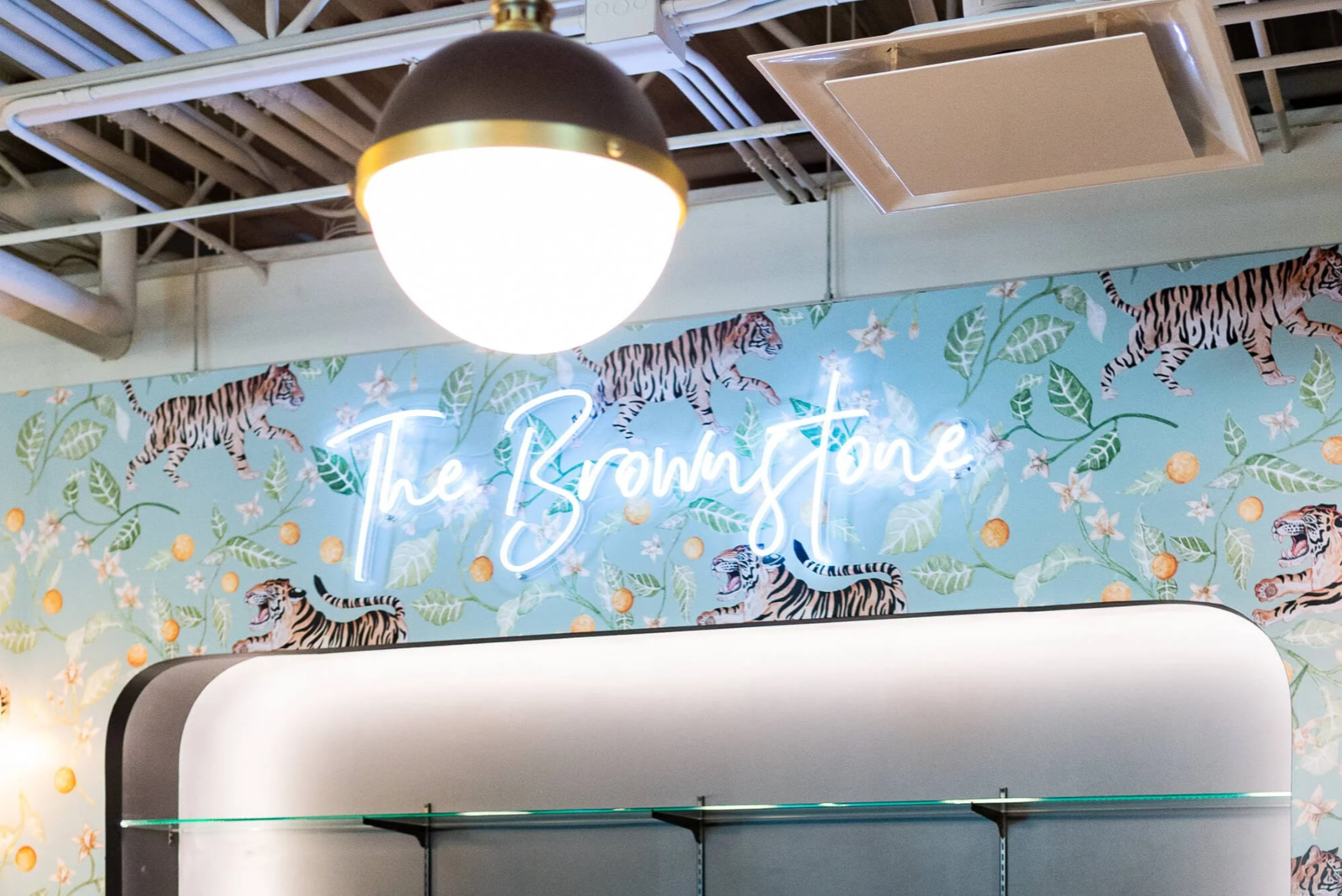
At The Brownstone, the open-concept layout lends itself to a connected reception where dinner, conversation, and dancing share the same general space.
At Offsite YYC, the more flexible, open layout gives couples greater freedom to decide where those activities happen. That flexibility is a real advantage, but it also makes thoughtful planning more important.
Different venues can support very different kinds of celebrations. Neither approach is inherently better. The question is whether the space supports yours.
4. Think About How the Room Will Feel at Different Times of Night
A wedding reception changes as the evening progresses.
During dinner, you want guests to feel comfortable talking across the table. Speeches should be easy to hear, and the atmosphere should feel welcoming rather than overwhelming.
Later, when the dancing starts, the room can take on a completely different personality.
Lighting becomes more noticeable. Music becomes a bigger part of the experience. Guests move around more, and the dance floor becomes a focal point.
A venue that feels wonderful in daylight might need some additional thought once the sun goes down.
Ask what lighting is already included and what can be adjusted. Are there restrictions on additional lighting or production equipment? Can the room be transformed without a complicated teardown or a major interruption to the evening?
Natural light is lovely for a ceremony and photographs. It isn’t necessarily what you want for the entire reception.
Similarly, a large room with high ceilings can feel spectacular, but it may need more deliberate lighting and sound planning to feel intimate and comfortable.
This is where it helps to think beyond the décor. You’re not just decorating a room. You’re creating an atmosphere that needs to work from the first arrival through the last dance.
5. Sound Matters More Than You Might Think
You can have beautiful flowers, incredible food, and a room full of people who are genuinely excited to celebrate.
But if nobody can hear the speeches, something important gets lost.
Sound is one of those details that’s easy to overlook when touring a venue because an empty room doesn’t tell you much about what it will sound like during a wedding.
The shape of the room, ceiling height, hard surfaces, guest seating, and speaker placement can all affect how sound behaves. A setup that works beautifully in one space might need a different approach in another.
Ask a few practical questions before booking:
– Is there an existing sound system, and what is it designed to accommodate?
– Are wireless microphones available for speeches and announcements?
– Are there restrictions on DJs, bands, speakers, or additional AV equipment?
– Are there noise limits, curfews, or rules about amplified music?
– Where can entertainment equipment be positioned without blocking guest movement or sightlines?
For outdoor ceremonies, ask about power access, microphone placement, weather contingencies, and whether the ceremony location needs a separate sound setup.
None of this means you need to become an audio technician before getting married. That’s not your job.
It does mean you should understand the venue’s capabilities and limitations before committing to a plan.
Professional AV services can help address technical requirements where needed, but the best starting point is knowing what the venue provides and what your event will actually require.
6. One Room or Multiple Spaces? Know the Trade-Offs.
Some couples love the idea of a wedding that moves through several distinct spaces.
The ceremony takes place in one location, cocktails happen somewhere else, dinner has its own room, and the party unfolds in a final space.
It can be a wonderful way to create different atmospheres throughout the day.
It can also introduce extra logistics.
Guests need to know where they’re going. Vendors may need to move equipment between spaces. Furniture might need to be rearranged. If a room needs to be reset between the ceremony and reception, someone needs to coordinate that transition.
And if the dance floor is in another room, you’ll want to consider whether guests will naturally follow the celebration or whether the separation might make the evening feel a little fragmented.
A single-room reception has its own advantages. Guests stay connected, transitions can be simpler, and the energy can build in one place.
The trade-off is that the room has to accommodate several functions at once, and the layout needs to make sense throughout the evening.
Neither option is the universal winner.
If you love a venue with multiple spaces, ask exactly how transitions work and who is responsible for them. If you prefer a single room, make sure the proposed layout leaves enough space for everything you want to include.
A beautiful venue can support either approach. The important part is understanding what each one requires.
7. The Practical Questions That Can Affect Your Budget
The venue rental fee is only one part of the financial picture.
Before you compare two Calgary wedding venues, make sure you’re comparing what each actually includes.
One venue might provide tables, chairs, linens, basic lighting, and an established sound system. Another might offer a more flexible blank canvas, with additional rentals and production costs to consider.
Neither arrangement is automatically better value.
A full-service venue can simplify planning, but you may have fewer choices about certain suppliers or setup details. A flexible venue can give you more creative control, but that freedom may come with additional decisions and costs.
Ask about:
– Tables, chairs, linens, and setup or teardown fees.
– Catering arrangements, bar service, and any outside-vendor restrictions.
– Included sound equipment, microphones, lighting, and technical support.
– Access times for vendor setup and the deadline for clearing the venue.
– Overtime fees, music restrictions, and end-of-night requirements.
– Additional rental costs if your preferred layout requires equipment the venue doesn’t supply.
Also ask what happens if your guest count changes or your preferred setup requires a different room arrangement.
The cheapest rental fee isn’t always the least expensive option once everything is accounted for. Equally, the most elaborate venue isn’t automatically the best investment.
Work out what matters to you, what is included, and what you’ll need to bring in separately. That gives you a much more honest comparison.

8. Ask What Happens When the Plan Changes
Even well-planned weddings have moving parts.
Dinner might run late. A speech might take longer than expected. The weather might change an outdoor ceremony plan. A vendor might need extra setup time.
A good venue team will have processes for handling the practical details, but it’s worth understanding those processes before your wedding day.
Ask who your main contact will be, when you’ll need to finalize your floor plan, and how changes are handled on the day. Find out whether the venue has an indoor alternative for an outdoor ceremony and what that alternative would look like in practice.
You should also understand who is responsible for coordinating the different vendors.
The venue team, planner, DJ, caterer, photographer, and AV technicians all have their own responsibilities. The smoother those responsibilities fit together, the easier it is to manage changes without making them everyone else’s problem.
This doesn’t mean planning for every possible disaster. It means understanding the basics well enough that a small adjustment doesn’t become a major production.
9. Choose the Venue That Fits Your Kind of Wedding
This is where all the practical details come together.
A traditional ballroom can be an excellent choice for a formal dinner, a large guest list, and a reception with a well-defined program.
An industrial venue may suit couples who want more creative control over the layout and atmosphere.
A smaller restaurant or intimate event space can be ideal for a celebration built around conversation, food, and a closer-knit group of guests.
An outdoor venue might be exactly right for a ceremony surrounded by Alberta scenery, provided you’ve thought through sound, weather, accessibility, and the practicalities of moving everyone between locations.
The point isn’t to find the venue that works for every wedding.
It’s to find the venue that works for *your* wedding.
Start with the experience you want to create. Think about the people you’re inviting, the way you want to spend the evening, and which parts of the celebration matter most to you.
Then evaluate the venues against those priorities.
A room doesn’t have to be elaborate to be memorable. It has to suit the people in it and give the celebration room to unfold.

Photo by Nikki Collette Photography
A Calgary Wedding Venue Checklist Before You Book
Before signing a contract, make sure you can answer these questions:
– Does the venue comfortably accommodate our guest count, tables, dance floor, and entertainment setup?
– Does the proposed layout support the kind of reception we want?
– Can guests move easily between tables, the bar, washrooms, and dance floor?
– Will speeches, announcements, and music work within the venue’s sound restrictions?
– What lighting, sound equipment, furniture, and other essentials are included?
– Are there additional costs for rentals, setup, teardown, overtime, or outside vendors?
– How will the room change throughout the evening?
– If the ceremony is outdoors or in a separate location, what is the backup plan?
– Who handles venue logistics and coordinates with our vendors?
– Does the space still make sense when we imagine it full of our actual guests?
You don’t need a perfect answer to every question on your first tour. You do want to know which details need clarification before you commit.
The Best Calgary Wedding Venue Is the One That Works With You
Choosing a wedding venue is a balancing act.
You want somewhere that looks right, fits your budget, accommodates your guests, and feels like the setting for the celebration you’ve imagined.
But don’t stop at the photographs.
Think about the dinner service, the speeches, the transitions, the sound, the lighting, and the moment the dance floor opens. Imagine your guests using the room rather than simply looking at it.
Sometimes the best venue is the one with the spectacular view. Sometimes it’s the room with the layout that makes everything feel easy. And sometimes it’s a space that doesn’t look particularly impressive when empty but becomes exactly what you wanted once the people, music, and atmosphere come together.
The venue sets the stage. How well that stage works makes a difference to everything that happens on it.
If you’re planning a Calgary wedding and thinking about how your reception will come together, Dance Shout’s wedding DJ services are built around more than music. We help couples think through reception timing, transitions, sound, and the details that allow the evening to unfold naturally.
Because a great wedding reception isn’t just about finding a beautiful room.
It’s about choosing a room that lets you make the most of the people, the moments, and the celebration happening inside it.